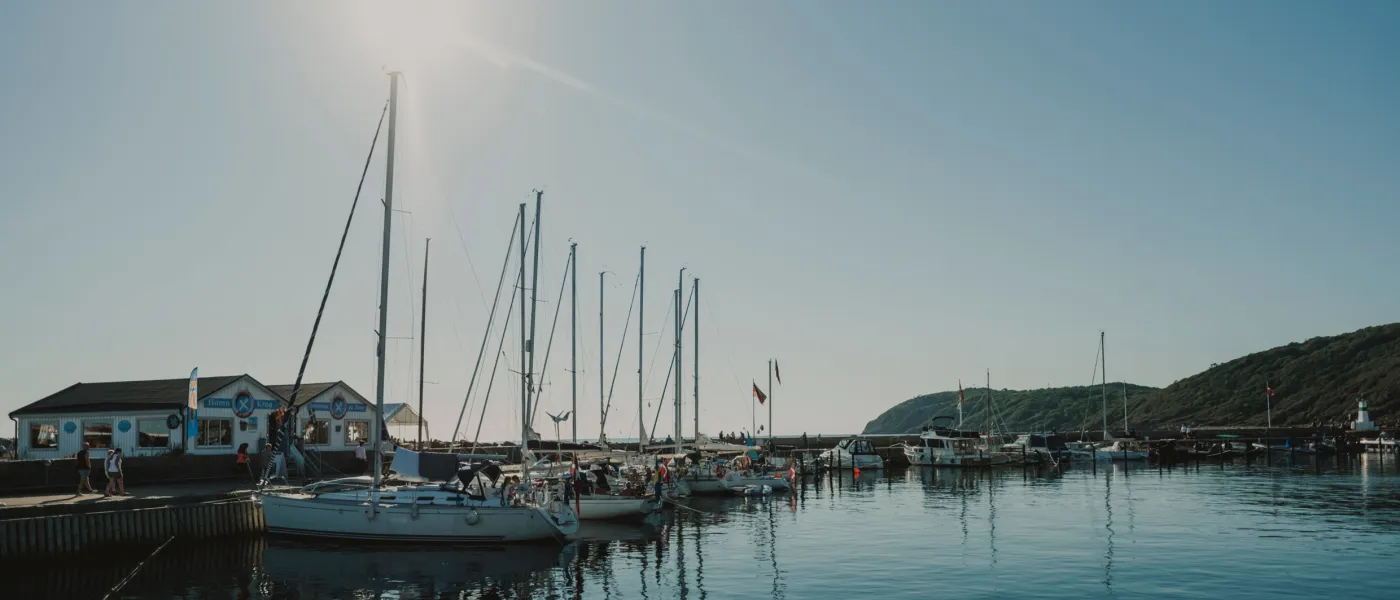
Solglittrande hamn med segelbåtar vid kaj, klarblå himmel och grönskande kulle i bakgrunden

WAVE – Designing Out Waste in Baltic Coastal Communities

The WAVE project helps tourism businesses along the Baltic Sea coast reduce waste and transition to a more circular economy. Visit Skåne leads the Swedish pilot, focusing on food waste in coastal hospitality.

WAVE – Designing Out Waste in Baltic Coastal Communities is a transnational cooperation project bringing together five partners from Denmark, Sweden, Poland, Lithuania and Germany to build a more resource-efficient coastal tourism sector. The project targets three of the tourism industry's most pressing challenges: single-use plastics, food waste and public waste sorting systems.

Visit Skåne takes part as a project partner responsible for the Swedish pilot, testing concrete solutions to reduce food waste among tourism businesses in Skåne. The work is carried out in close collaboration with Höganäs municipality and local players in the hospitality sector. The project runs from July 2026 to June 2028.


This is WAVE

Single-use plastics dominate the food and catering sector, food waste is significant due to seasonal variation and limited infrastructure, and sorting systems on beaches, marinas and promenades work unevenly. WAVE addresses these challenges by supporting tourism businesses and municipalities in the transition to more circular working methods.

The project is built on a clear four-step working model. The process begins by mapping challenges and needs in each partner region through surveys, analyses and joint workshops with businesses and municipalities. This is followed by a structured matchmaking process, connecting tourism businesses with solution providers able to meet the identified needs.

Based on the matchmaking results, pilot projects are then carried out in three regions. The Swedish pilot focuses on measuring, preventing and managing food waste in coastal hospitality, carried out in collaboration with Höganäs municipality. Finally, experiences and results are compiled into tools and action plans shared with other regions around the Baltic Sea.

Visit Skåne is responsible for coordinating the regional work in Sweden: mobilising tourism businesses and municipalities, organising workshops and matchmaking events, and leading the implementation and follow-up of the pilot project in Skåne.

Why WAVE

The purpose of WAVE is to accelerate the transition to circular, resource-efficient coastal tourism in the Baltic Sea region. The project is based on the premise that sustainable solutions for waste management and material flows need to be developed jointly by businesses, municipalities and knowledge organisations, and that successful models from one region can be shared and adapted to others.

The goal is for at least 25 organisations to have adopted circular solutions developed within the project by the end of the project period. In practice, this means tourism businesses replacing single-use items with reuse systems, reducing food waste through measurement and new routines, and improving their waste sorting.

For Visit Skåne and Skåne, WAVE is about strengthening the long-term competitiveness and sustainability of the tourism industry. Food waste represents a significant cost and environmental problem for tourism businesses along the coast. By testing concrete, scalable solutions in a Skåne context, the project generates knowledge and methods that the tourism industry can use long after the project period ends.

The project's results are compiled into three joint tools developed transnationally:

  • A methodology guide for co-creation and matchmaking, describing how other regions and sectors can carry out similar processes
  • An interactive toolbox for circular business, giving tourism businesses practical support to transform their operations
  • A regional action plan covering three themes, one for single-use plastics, one for food waste and one for sorting in public spaces, providing municipalities and tourism organisations with concrete guidance linked to EU regulations

EU logos

Page updated 10 Sep 2026, at 19:22